
FIND YOUR RIDE





-
 Canyon
 -
Sierra 1500
-
Sierra 1500 Limited
-
Sierra 2500hd
-
Sierra 3500hd
-
Terrain
-
Acadia
-
Yukon
-
Yukon Xl
-
Savana Cargo 2500
-
Savana 3500 Passenger










-
Spark
-
Malibu
-
Trax
-
Equinox
-
Trailblazer
-
Traverse
-
Tahoe
-
Suburban
-
Colorado
-
Silverado
-
Silverado 1500 Ld
-
Silverado 2500hd
-
Silverado 3500 Hd
-
Camaro
-
Corvette














-
Regal Sportback
-
Lacrosse
-
Encore
-
Encore Gx
-
Envision
-
Enclave






Buick
EXPLORE ALL VEHICLES
-
Regal Tourx
-
Regal Sportback
-
Lacrosse

-
Encore
-
Envision
-
Enclave


-
CHEVROLET TRAX
-
CHEVROLET EQUINOX
-
CHEVROLET TRAVERSE
-
CHEVROLET TAHOE
-
CHEVROLET SUBURBAN
-
CHEVROLET City Express
-
CHEVROLET Silverado
-
CHEVROLET Colorado


-
Chevrolet Spark
-
Chevrolet Bolt EV
-
Chevrolet Volt
-
Chevrolet Sonic
-
Chevrolet Impala
-
Chevrolet Malibu
-
Chevrolet Cruze




-
Terrain
-
Acadia
-
Yukon

-
Canyon
-
Sierra 1500
-
Sierra HD
-
Sierra 1500 Limited


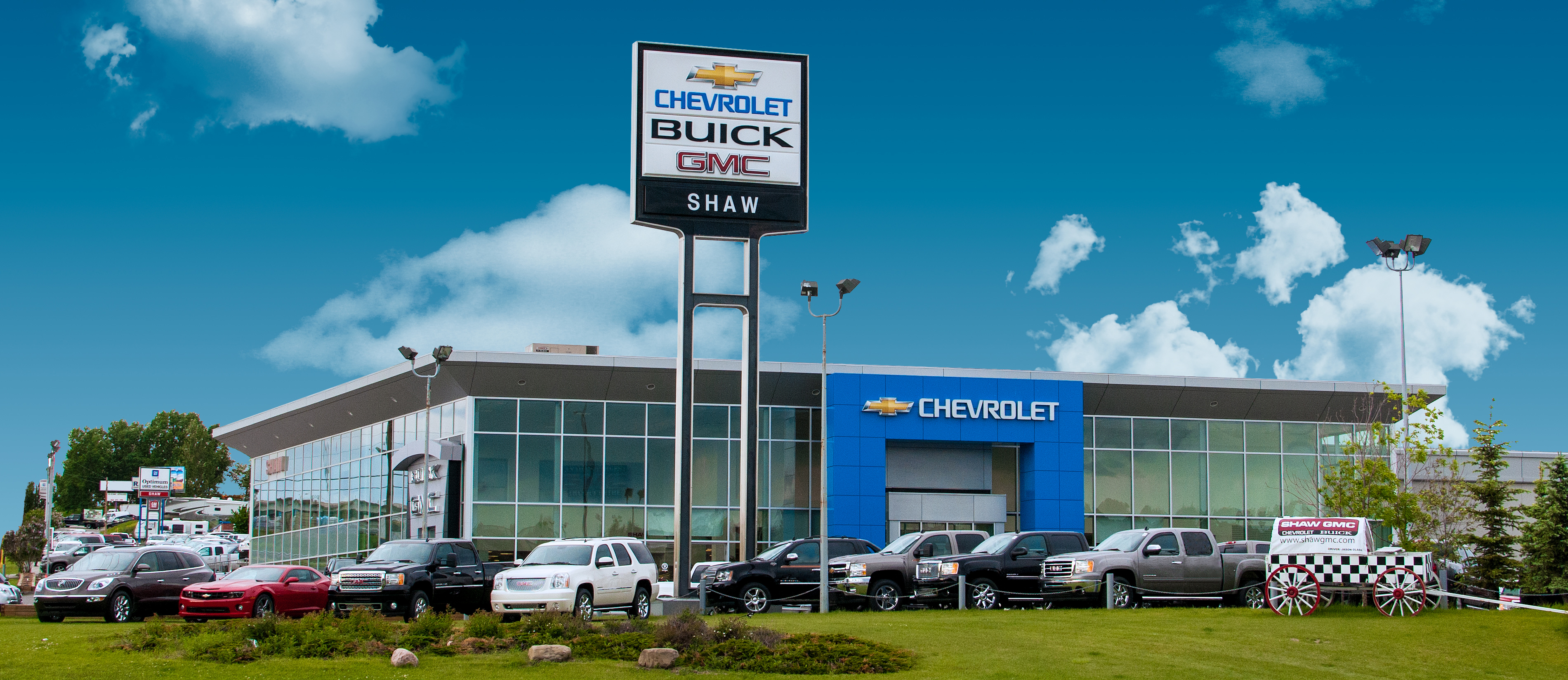
Welcome to Shaw GMC Chevrolet Buick
Your Local Calgary Car Dealership!
Shaw GMC Chevrolet Buick is your go-to car dealership serving the Calgary, Cochrane and Canmore, AB areas. We can help you find your next new car, get you financing, find you the parts you need, and even service your current vehicle.
We have a large inventory of new 2024 vehicles, including GMC, Chevy and Buick models and pre-owned vehicles. Our expert staff is looking forward to helping you find your next Chevy Cruze, GMC Terrain or another vehicle that fits your driving needs. Take the time to browse our new and used car models online or stop in to take one of them for a test drive today. Worried about financing? We are here to assist! Getting into the Chevy model you've always wanted is easy with our knowledgeable Buick finance center. You can start the financing process as soon as you're ready by filling out our online GMC finance application.
- Monday 8:00AM - 8:00PM
- Tuesday 8:00AM - 8:00PM
- Wednesday 8:00AM - 8:00PM
- Thursday 8:00AM - 8:00PM
- Friday 8:00AM - 6:00PM
- Saturday 9:00AM - 5:00PM
- Sunday Closed
- Monday 7:00AM - 6:00PM
- Tuesday 7:00AM - 6:00PM
- Wednesday 7:00AM - 6:00PM
- Thursday 7:00AM - 6:00PM
- Friday 7:00AM - 6:00PM
- Saturday 8:00AM - 3:00PM
- Sunday Closed
- Monday 8:00AM - 6:00PM
- Tuesday 8:00AM - 6:00PM
- Wednesday 8:00AM - 6:00PM
- Thursday 8:00AM - 6:00PM
- Friday 8:00AM - 5:30PM
- Saturday 8:00AM - 3:00PM
- Sunday Closed
- Monday 8:00AM - 5:00PM
- Tuesday 8:00AM - 5:00PM
- Wednesday 8:00AM - 5:00PM
- Thursday 8:00AM - 5:00PM
- Friday 8:00AM - 5:00PM
- Saturday Closed
- Sunday Closed
Get Your Directions !